English
 September 19, 2026

leave a message
If you are interested in our products and want to know more details,please leave a message here,we will reply you as soon as we can.


Choosing an industrial cooling solution is not a small decision. Whether you operate a fishing vessel that spends weeks at sea or manage a concrete batching plant in a tropical region, the type of ice you use directly impacts product quality, operational costs, and your bottom line. While many businesses default to traditional ice forms, a growing number of industries are discovering that a modern ice flake maker machine offers a distinct set of advantages that solve persistent operational challenges. This article breaks down the pros and cons of flake ice, examines the industries that benefit most, addresses common pain points, and explores how today’s smart, heavy-duty equipment—including the 10 ton ice flake machine segment—is transforming industrial cooling.
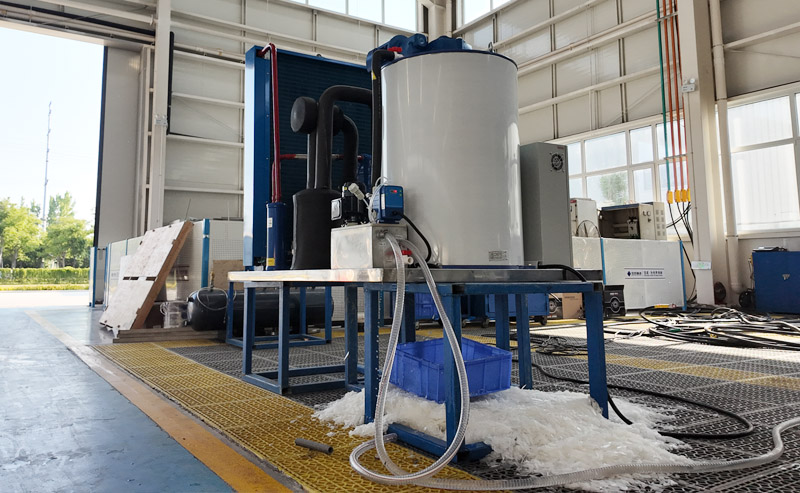
Flake ice is distinct from other ice types. Produced by spraying or cascading water over a refrigerated drum surface and scraping off thin layers with a blade, flake ice emerges as soft, irregular, dry flakes typically 1.5–2.5 mm in thickness. Properties that make flake ice especially useful include an exceptionally high surface area-to-mass ratio that enables rapid heat transfer, a soft structure that conforms to irregular product surfaces without causing bruising, and a dry, sub-cooled nature that minimizes meltwater wastage.
In contrast, traditional cube or block ice, while more durable, cools slower, damages delicate items, and requires crushing before use, adding an extra labor step.
Every cooling solution has trade-offs. Understanding both sides helps you determine whether flake ice—and by extension, a dedicated ice flake maker machine—is the right fit for your operation.
The seafood industry is arguably the most demanding and dependent on flake ice. Freshly caught fish begin to spoil immediately after leaving the water, and preserving quality requires immediate temperature reduction. Ice flake machine for fishing vessels applications are specifically designed to withstand the harsh maritime environment: constant vibration, saltwater corrosion, limited space, and the need for 24/7 faultless operation.
Onboard flake ice production allows vessels to stay at sea longer without compromising catch quality. A 10 ton ice flake maker integrated into a vessel’s refrigeration system can produce enough ice to chill a full day’s haul immediately upon landing. Moreover, adding flake ice to cargo hold cooling systems has been shown to reduce cooling load and cut electricity consumption, making vessels more efficient and profitable.
Large-scale concrete projects—dams, bridges, ports, high-rise foundations—face a critical challenge: heat of hydration. As concrete cures, the chemical reaction releases heat, and if temperatures rise too high, thermal cracking occurs, compromising structural integrity. Flake ice directly addresses this by replacing up to 40% of the mixing water with sub-cooled flake ice, lowering the concrete mix temperature instantly and preventing cracks while increasing final durability.
For projects in hot climates or massive pours, industrial-scale flake ice production is essential. A heavy duty ice flake machine with 10–15 ton daily capacity can operate continuously on-site, ensuring a steady supply of cooling.
Bakeries, meat processing plants, ready-meal manufacturers, and supermarket display counters all rely on flake ice. Its moldable texture makes it ideal for layered produce displays, while its rapid cooling prevents bacterial growth in freshly cut meats and prepared foods. Flake ice’s gentle nature also protects soft fruits, packaged leafy greens, and delicate pastry doughs during transport and short-term storage.
Many chemical reactions are exothermic—they generate heat that must be controlled precisely to maintain safety and product consistency. Flake ice manufacturers provide temperature-stable, contaminant-free cooling that can be integrated directly into reactor jackets or mixing vessels. The pharmaceutical industry, meanwhile, relies on flake ice to preserve sensitive biological samples, vaccines, and medical supplies. In healthcare settings, temperature-controlled flake ice supports therapeutic cooling and cold compress applications. In these sectors, hygiene standards are paramount, making stainless steel construction and easy-to-sanitize components non-negotiable.
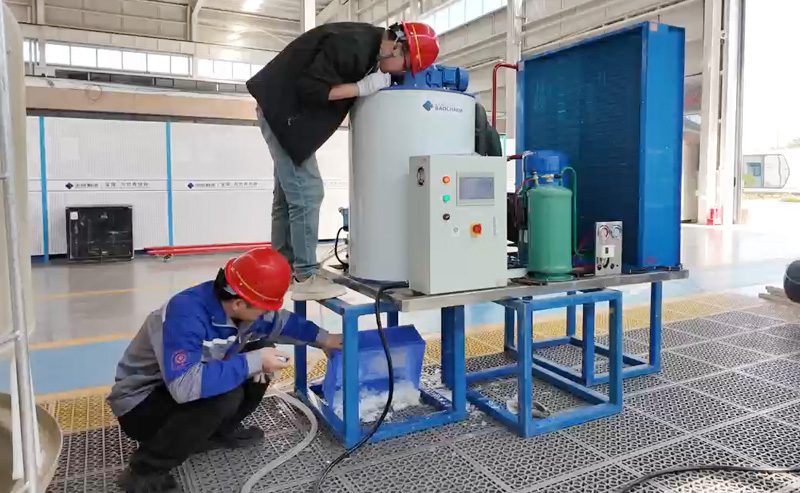
Block or cube ice takes longer to cool products due to lower surface area contact. Flake ice’s thin, irregular form cools up to significantly faster, pulling heat from products within minutes instead of hours. This is especially critical for fishing vessels where every minute counts.
Fish bruising, fruit crushing, and packaging tearing caused by hard ice corners directly reduces product value. Flake ice, being soft and conformable, cushions delicate goods without causing physical damage.
Refrigeration is energy-intensive. However, modern ice flake maker machine designs incorporate variable-speed compressors, digital controls, and optimized condenser systems that drastically reduce watt-per-kg ice production compared to older equipment.
Marine, construction, and industrial environments are hostile to poorly designed equipment. Corrosion from saltwater, vibration from ship engines, and dust from concrete plants all take a toll. High-quality industrial flake ice machines address this through marine-grade aluminum alloy frames, powder-coated steel, stainless steel evaporators, and components mounted on anti-vibration bases.
In food processing and healthcare, microbial contamination is unacceptable. Flake ice producers using food-grade stainless steel surfaces, self-cleaning evaporator designs, and sanitization protocols meet the most stringent health standards.
Traditionally, flake ice machines operated with straightforward mechanical designs: water sprayed onto a cooled drum, then scraped off by a blade. While functional, these early systems offered limited control over ice quality, energy consumption, and maintenance planning. Today, the industry has transformed. The global market for industrial flake ice machines was valued at US$1.58 billion in 2024 and is projected to reach approximately US$2.20 billion by 2031, growing at a CAGR of 4–7%.
This growth is driven by:
For businesses requiring significant daily ice production, the 10 ton ice flake machine segment represents the ideal balance between capacity and practical installation. These systems are designed to run 24/7 in demanding environments, producing dry, sub-cooled flake ice at rates suitable for medium-to-large fishing vessels, high-volume seafood processing plants, and major construction projects. Features typically include corrosion-resistant stainless steel, programmable logic controllers (PLC) with remote monitoring, and the ability to use either fresh or seawater as the water source. At BAOCHARM, our BCPB-10T Marine-Grade Ice Flake Maker produces up to 10 tons of dry flake ice every 24 hours, with ice thickness adjustable between 1.5 and 2.5 mm. Built for harsh maritime conditions with marine-grade corrosion-resistant materials, key components mounted on anti-vibration bases for stabilised performance in rolling seas, and service access points to facilitate installation in tight engine rooms.
Whether you are retrofitting a vessel, expanding an onshore processing line, or upgrading a concrete batching plant’s cooling system, a properly specified heavy duty ice flake machine delivers reliability, efficiency, and product quality that legacy systems cannot match.
Flake ice is not a one-size-fits-all solution, but for industries requiring rapid cooling, gentle handling of delicate products, and operational energy efficiency, it often outperforms traditional ice types. From fishing vessels and seafood processing to concrete cooling and pharmaceutical storage, the applications continue to expand. Modern ice flake maker machines address historical limitations through smart controls, durable construction, and energy-saving designs—all backed by a global market that recognizes flake ice as a cornerstone of industrial cooling.
Market data referenced in this article reflects publicly available research as of 2026. Forecasts and valuations cited from third-party sources should be verified for current applicability.
Every operation has unique demands—vessel size, ambient conditions, daily ice requirements, space constraints. BAOCHARM engineers tailored solutions that match your specific needs, whether you require a 10 ton ice flake maker for a commercial fishing vessel, a compact unit for an onshore processing plant, or a containerized system for rapid deployment at a construction site.
Contact our technical team today for a no-obligation consultation. We will analyze your operational parameters, recommend the optimal configuration, and deliver a system built for continuous, trouble-free performance.


Our Contacts
Email: sales@baocharm.com
WhatsApp: +86 17663537579
Wechat: +86 17663537579
Working Hours: Mon ~ Sat 8:30 AM - 5:30 PM
 IPv6 network supported